Top Cryptocurrency Picks for Future Growth

Are you ready to identify which cryptocurrencies could give your portfolio the best shot at growth by and beyond?
Top Cryptocurrency Picks for Future Growth
This article lays out professional-grade, friendly guidance to help you weigh the top crypto opportunities for future growth. You’ll find clear reasons why each coin could perform well, what to watch for, and practical tips for managing risk and execution.
Why selecting the right crypto matters now
Choosing the right cryptocurrencies matters because the market is maturing and competition is intense. You’ll want assets that combine strong fundamentals, real-world use cases, active developer ecosystems, and clear paths to adoption.

This image is property of pixabay.com.
How I selected the top picks
I prioritized projects with strong networks, developer activity, real use cases, liquidity, and visible upgrade roadmaps. You’ll see a mix of store-of-value, smart-contract platforms, and infrastructure protocols that can capture demand from finance, gaming, Web3, and enterprise use.
Key concepts you should understand before allocating
Before you invest, you should understand tokenomics, consensus mechanisms, total supply vs circulating supply, on-chain activity, and the difference between native tokens and utility/ governance tokens. These concepts help you evaluate risk and long-term viability.

This image is property of pixabay.com.
Top cryptocurrencies for 2025
Below are the five picks that combine solid fundamentals with credible upside potential heading into 2025. For each coin you’ll get a concise summary, growth catalysts, main risks, and practical metrics to monitor.
1) Bitcoin (BTC)
Bitcoin is the original cryptocurrency and remains the most liquid, recognized, and secure network. You’ll benefit if you’re looking for a scarce digital store of value with wide institutional recognition.
Why it could grow:
- Institutional adoption, ETFs, and macro inflows can increase demand for BTC as a digital gold alternative.
- Network-level upgrades and continued growth in on-chain activity strengthen its long-term case.
Main risks:
- Regulatory scrutiny and potential national-level restrictions can impact price volatility.
- BTC is primarily a store of value rather than a programmable platform, so growth depends on macro adoption and demand for scarcity.
Key metrics to watch:
- Exchange inflows/outflows, realized price, supply held by long-term holders, and ETF flows.
- On-chain indicators like active addresses, hash rate, and number of wallets holding meaningful balances.
How you might use BTC in your portfolio:
- Consider allocating it as a core position (e.g., 20–40% of your crypto allocation), depending on risk tolerance. You can use dollar-cost averaging (DCA) to reduce timing risk.
2) Ethereum (ETH)
Ethereum is the leading smart-contract platform that powers most DeFi, NFTs, and a large share of decentralized applications. You’ll find Ethereum’s move to proof-of-stake and continuous scaling work make it a central pillar for future crypto growth.
Why it could grow:
- Strong network effects with major developer activity and a huge ecosystem of dApps and protocols.
- Upgrades and Layer-2 adoption can improve scalability and reduce fees, broadening use cases and accessibility.
Main risks:
- High fees and congestion at times can push users to alternative chains.
- Regulatory uncertainty around tokens and programmability could influence future adoption.
Key metrics to watch:
- Total Value Locked (TVL) in DeFi, ETH supply changes (burn rate from EIP-1559), Layer-2 transaction volume, and active developers.
- Staking participation and the ratio of staked ETH to circulating supply.
How you might use ETH in your portfolio:
- Treat ETH as a growth and utility asset (e.g., 20–40% of crypto allocation). Consider staking or using L2 rollups to capture yield or lower fees.
3) Solana (SOL)
Solana is a high-throughput blockchain focused on speed and low transaction costs, making it attractive for gaming, NFTs, and high-frequency DeFi applications. You’ll like its performance for applications that require fast finality and low gas fees.
Why it could grow:
- Strong adoption in gaming and NFTs that require fast, cheap transactions.
- Active developer ecosystem and a growing set of DeFi primitives and marketplaces.
Main risks:
- Historical network outages and centralization concerns have dented trust in the past.
- Intense competition from other Layer-1 and Layer-2 solutions could hinder long-term dominance.
Key metrics to watch:
- Transaction throughput, average fees, unique wallet growth, and DApp usage statistics.
- Infrastructure decentralization measures like validator distribution and node requirements.
How you might use SOL in your portfolio:
- Consider a tactical allocation (e.g., 5–15% of your crypto holdings) if you want exposure to high-performance apps, but be prepared for higher volatility.
4) Chainlink (LINK)
Chainlink is the leading decentralized oracle network that supplies real-world data to smart contracts. You’ll benefit if you want exposure to the infrastructure layer that many DeFi applications depend on.
Why it could grow:
- Increasing demand for reliable oracles as DeFi and on-chain derivatives expand.
- Chainlink’s broad adoption across multiple blockchains positions it as a critical infrastructure play.
Main risks:
- Competition from other oracle providers and native oracle designs built into blockchains.
- Smart contract exploits or oracle manipulation risks if not properly mitigated.
Key metrics to watch:
- Number of data feeds, fee revenue, cross-chain deployments, and integrations across protocols.
- Development of new oracle products (e.g., verifiable randomness, decentralized identity).
How you might use LINK in your portfolio:
- Treat LINK as an infrastructure bet (e.g., 3–10% of your crypto allocation) for diversification away from pure L1/L2 tokens.
5) Polkadot (DOT)
Polkadot enables cross-chain interoperability and parachain architecture aimed at scalable, customizable blockchains. You’ll find it useful if you value projects that connect ecosystems and enable specialized chains to interoperate.
Why it could grow:
- Interoperability demand rises as multi-chain applications become common.
- Parachain auction winners and growing cross-chain traffic can attract developer resources and users.
Main risks:
- Strong competition from alternative interoperability solutions and Layer-1s pursuing similar models.
- Complexity of parachain economics and governance can slow adoption and user experience improvements.
Key metrics to watch:
- Parachain utilization, transfer volume across parachains, auctions results, and developer activity.
- Cross-chain bridges reliability and security audits.
How you might use DOT in your portfolio:
- Consider a position for long-term diversification into interoperability (e.g., 3–10% of crypto allocation), adjusting exposure as parachain projects mature.
Comparison table: Top at a glance
| Coin | Primary use case | Consensus | Typical investor role | Primary growth catalyst |
|---|---|---|---|---|
| Bitcoin (BTC) | Store of value, settlement | Proof-of-Work | Core reserve asset | Institutional adoption, scarcity |
| Ethereum (ETH) | Smart contracts, DeFi, NFTs | Proof-of-Stake | Platform/utility asset | L2 adoption, protocol upgrades |
| Solana (SOL) | High-speed apps, gaming | Proof-of-History / PoS hybrid | High-throughput apps | App adoption, low fees |
| Chainlink (LINK) | Decentralized oracles | N/A (network of nodes) | Infrastructure play | Oracle adoption across DeFi |
| Polkadot (DOT) | Interoperability, parachains | Nominated Proof-of-Stake | Cross-chain infrastructure | Parachain adoption, cross-chain bridges |

This image is property of pixabay.com.
Risk profiles and suggested allocations
Every investor has a different risk tolerance, time horizon, and capital allocation needs. The table below gives a starting framework for how you might split crypto exposure across these picks, depending on whether you’re conservative, balanced, or aggressive.
| Profile | BTC (%) | ETH (%) | SOL (%) | LINK (%) | DOT (%) |
|---|---|---|---|---|---|
| Conservative | 50 | 30 | 5 | 10 | 5 |
| Balanced | 35 | 35 | 10 | 10 | 10 |
| Aggressive | 25 | 30 | 20 | 15 | 10 |
These are illustrative allocations. You should adapt them to your overall financial situation and risk tolerance.
Additional factors that will shape performance
Several macro and sector-specific factors will influence which cryptocurrencies outperform. You’ll want to monitor these closely to adjust positions as conditions change.
Regulatory environment
Regulation will shape investor access, custodial services, and token listings. You’ll need to follow evolving rules in major markets like the U.S., EU, and Asia, as they will affect liquidity and institutional participation.
Macro conditions
Interest rates, inflation, and risk-on vs risk-off market regimes will strongly influence crypto flows. You’ll note that crypto correlates with risk asset appetite during periods of speculative buying.
Technological upgrades
Protocol upgrades (e.g., scalability, finality improvements, bridges) can reduce friction and expand use cases. You’ll want to track major upgrade timelines for each network.
Institutional adoption
More custody solutions, ETFs, and corporate balance sheet allocations increase liquidity and reduce volatility over time. You’ll want to verify institutional support where possible.
How to evaluate crypto projects yourself
You should use repeatable criteria to assess new and existing crypto projects. This helps you avoid hype-driven decisions.
Team and governance
Evaluate the founding team, developer activity, and governance model. You’ll favor projects with transparent development roadmaps and accountable governance.
Real adoption and demand
Look for actual user metrics—active addresses, TVL, transaction volume, and developer activity. You’ll want demand that isn’t just marketing hype.
Tokenomics and incentives
Analyze token supply, emission schedule, and staking or burning mechanics. You’ll want a token that aligns incentives between users, developers, and long-term holders.
Security and audits
Check for third-party audits and a history of responsible vulnerability handling. You’ll prefer protocols with strong security cultures and incident response plans.
Practical steps to build and manage your crypto portfolio
Putting these picks into practice requires disciplined processes and attention to security and costs.
Choose your custodial model
Decide whether you’ll custody assets yourself or use a regulated custodian. You’ll find self-custody gives you control but requires strong security practices. Custodial services simplify access but add counterparty risk.
Use dollar-cost averaging (DCA)
DCA helps you reduce the impact of volatility by buying consistently over time. You’ll benefit from smoother entry prices and reduced emotional decision-making.
Rebalance periodically
Rebalance to maintain your target allocations and manage risk. You’ll want to rebalance after major price moves or at scheduled intervals (quarterly or semi-annually).
Staking and yield options
Staking can provide passive yield for PoS assets like ETH and DOT, but it can lock up funds or have slashing risks. You’ll weigh yield opportunities against liquidity needs.
Diversify across sectors
Diversify not only across tokens but across use cases: store-of-value, smart-contract platforms, infrastructure, and interoperability. You’ll reduce single-point-of-failure risk by doing so.
Security best practices
Use hardware wallets for self-custody, enable multi-factor authentication on exchanges, and verify smart contract addresses before interacting. You’ll protect your holdings by prioritizing security.

How to size your position in a new crypto pick
Position sizing should reflect conviction, risk assessment, and capital you can afford to lose. You’ll consider using a smaller starter allocation and scale up as the project meets milestones and metrics.
Use a conviction ladder
Start with a small initial bet, then add on clear positive signals (e.g., adoption milestones, bleeding-edge partnerships, improved security). You’ll avoid full commitment until you see evidence.
Stop-loss and risk limits
Set stop-loss levels or mental exit points for volatile holdings. You’ll protect downside with predefined rules rather than emotional reactions during drawdowns.
Alternative and up-and-coming sectors to watch
Beyond the top 5, several adjacent sectors could deliver significant returns if they mature: Layer-2 networks, decentralized storage, privacy-preserving platforms, and gaming/NFT infrastructure.
Layer-2 scaling solutions
Layer-2s relieve congestion on base chains and capture transaction volume and fees. You’ll watch adoption of optimistic rollups, zk-rollups, and other L2 innovations.
Decentralized identity and privacy
Privacy-enhancing solutions and decentralized identity systems will be important as users demand better data sovereignty. You’ll evaluate projects solving real-world identity friction.
Web3 gaming and metaverse
Play-to-earn and asset-owned gaming can drive token demand if games attract meaningful user bases and economics are sustainable. You’ll assess player retention, token sinks, and developer support.
Decentralized storage and compute
Infrastructure-level protocols for storage and compute can earn steady fees as global demand for distributed services grows. You’ll look for networks with strong partner ecosystems.
Practical examples: trade setups and watchlist triggers
Setting concrete triggers helps you act without emotion. Below are sample triggers you could use for entry and exit decisions.
Entry triggers you might use
- Price retracement to a long-term moving average with improving on-chain fundamentals.
- On-chain volume growth combined with positive developer announcements.
- Major upgrade released and reliably functioning for a sustained period.
You’ll combine technical and fundamental signals to increase probability.
Exit triggers you might use
- Significant protocol failure, unresolved security breach, or sustained negative developer activity.
- Fundamental shift in regulation that materially impairs token utility.
- Profit targets reached (e.g., 2x, 3x, etc.) and you want to rotate into underweighted assets.
You’ll keep rules simple to avoid top-timing mistakes.
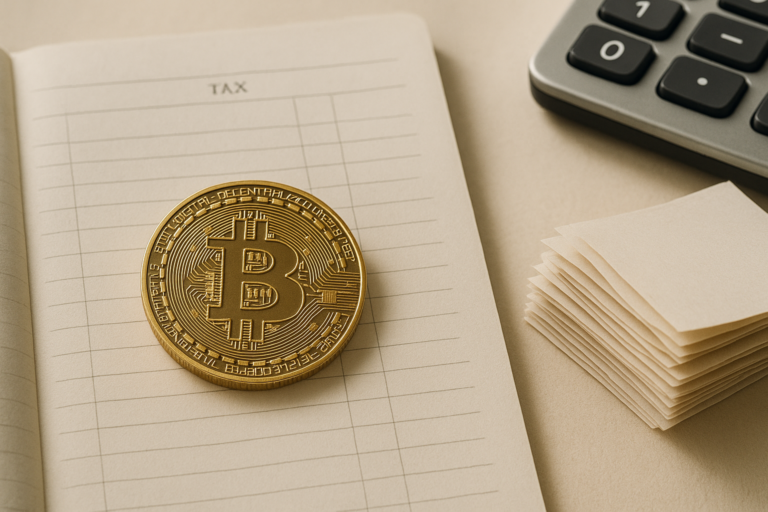
Tax, compliance, and recordkeeping
Cryptocurrency taxation is complex in many jurisdictions. You’ll maintain accurate records of trades, staking rewards, and on-chain transfers to comply with reporting requirements.
Actions to take
- Use portfolio tracking and tax-software tools that integrate with exchanges and wallets.
- Keep clear records of cost basis for each token and each transaction.
- Consult a tax professional for jurisdiction-specific guidance.
You’ll save time and reduce legal risk by staying organized.
Common mistakes to avoid
You’ll maximize long-term results by avoiding these frequent errors many investors make.
- Chasing low-quality “get-rich-quick” tokens without fundamental support.
- Failing to secure private keys and falling victim to hacks or phishing.
- Overconcentration in a single high-volatility asset without a risk plan.
- Ignoring on-chain metrics and relying only on social media sentiment.
You’ll protect capital and reduce stress by following disciplined investing practices.
How to stay informed without getting overwhelmed
The crypto space moves fast; you’ll pick a few reliable sources and automate alerts. Prioritize official project blogs, reputable analytics platforms, and audited announcements.
Recommended information habits
- Subscribe to project newsletters or developer updates for primary-source news.
- Set alerts for significant on-chain metrics and protocol upgrades.
- Limit social media noise and verify claims before reacting.
You’ll keep your decisions grounded by focusing on verified progress and measurable adoption.
Scenario planning: favorable and unfavorable outcomes
Thinking in scenarios helps you prepare for different market paths and reduces emotional trading.
Bull case
Widespread institutional adoption, continued DeFi growth, and major consumer use cases drive demand; BTC and ETH solidify market dominance while selected L1s and infrastructures capture niches. You’ll see higher portfolio valuations and more stable liquidity.
Bear case
Tightened regulation, macro headwinds, or major protocol failures erode confidence and liquidity; smaller or less secure projects lose value quickly. You’ll need to manage risk and maintain liquidity during drawdowns.
Final checklist before you act
Use this checklist to ensure you’re prepared to invest in crypto responsibly.
- Have you defined your investment horizon and risk tolerance?
- Are your security practices (wallets, backups, MFA) in place?
- Do you have a clear position-sizing plan and rebalancing schedule?
- Have you researched tax implications and recordkeeping tools?
- Do you have entry and exit criteria for each investment?
You’ll invest with more confidence by covering these bases.
Closing thoughts and next steps
The five coins profiled—Bitcoin, Ethereum, Solana, Chainlink, and Polkadot—represent a blend of store-of-value, programmable platforms, high-performance chains, and essential infrastructure. You’ll find that combining a core allocation to BTC and ETH with tactical exposure to high-growth networks and infrastructure gives you balanced upside while managing risk.
If you’re ready to act, start by formalizing your plan: set allocations, security measures, and a schedule for review. You’ll minimize regret and improve outcomes by approaching crypto investing methodically rather than emotionally. Remember to reassess regularly as the market and technologies evolve.
Disclaimer: This article is informational only and is not financial, tax, or legal advice. You should perform your own research and consult professional advisors before making investment decisions.

You May Also Like


More From Author