Guide to the fastest-growing cryptocurrency

?Which cryptocurrency could be the fastest-growing asset for you in 2025, and how can you position yourself to benefit while managing risk?
Guide to the fastest-growing cryptocurrency
This guide helps you understand what “fastest-growing cryptocurrency” means, which projects could qualify in 2025, how to evaluate them, and practical steps you can take to research, buy, and secure tokens. You’ll find actionable criteria, comparisons, risk controls, and tools so you can make informed decisions aligned with your goals.
What does “fastest-growing cryptocurrency” mean?
When you call a cryptocurrency the fastest-growing, you’re usually referring to rapid increases in market value, network activity, or user adoption over a short period. Growth can mean price appreciation, rapid increases in total value locked (TVL), surging daily active addresses, or expanding developer and ecosystem activity.
Growth dimensions to track
You should consider multiple dimensions: price growth, market cap expansion, on-chain activity, developer momentum, and real-world adoption. Focusing on a single metric can give a misleading view; the best candidates show alignment across several indicators.
Why multi-metric assessment matters
Price spikes that aren’t supported by network growth or real utility may be speculative bubbles that can reverse quickly. When you evaluate potential fastest-growing cryptocurrencies, weigh both speculative drivers (market sentiment, listings) and fundamental drivers (protocol upgrades, partnerships).
Key metrics used to measure growth
You’ll want to track a blend of price, network, and developer metrics to form a holistic view. Each metric tells you something different about sustainability and momentum.
Common metrics and what they indicate
- Market capitalization: shows size and relative room to grow, but not depth or health.
- Trading volume: measures liquidity and market interest.
- Active addresses and transaction count: indicate user activity on the network.
- Developer activity (commits, GitHub contributors): a proxy for protocol roadmaps and enhancements.
- Total value locked (TVL) for DeFi chains: measures financial activity and trust.
- Token distribution and supply dynamics: shows concentration risk and inflation.
Quick comparison table of metrics and why they matter
| Metric | What it suggests | How you might use it |
|---|---|---|
| Market cap | Relative size and growth potential | Compare potential upside vs risk |
| Volume | Liquidity and short-term interest | Avoid illiquid tokens that are hard to exit |
| Active addresses | User adoption and engagement | Look for sustained increases |
| Developer commits | Ongoing improvements and roadmaps | Evaluate long-term viability |
| TVL | Financial adoption for DeFi projects | Strong signal for blockchain utility |
| Token supply dynamics | Inflation, lockups, vesting | Understand dilution risks |
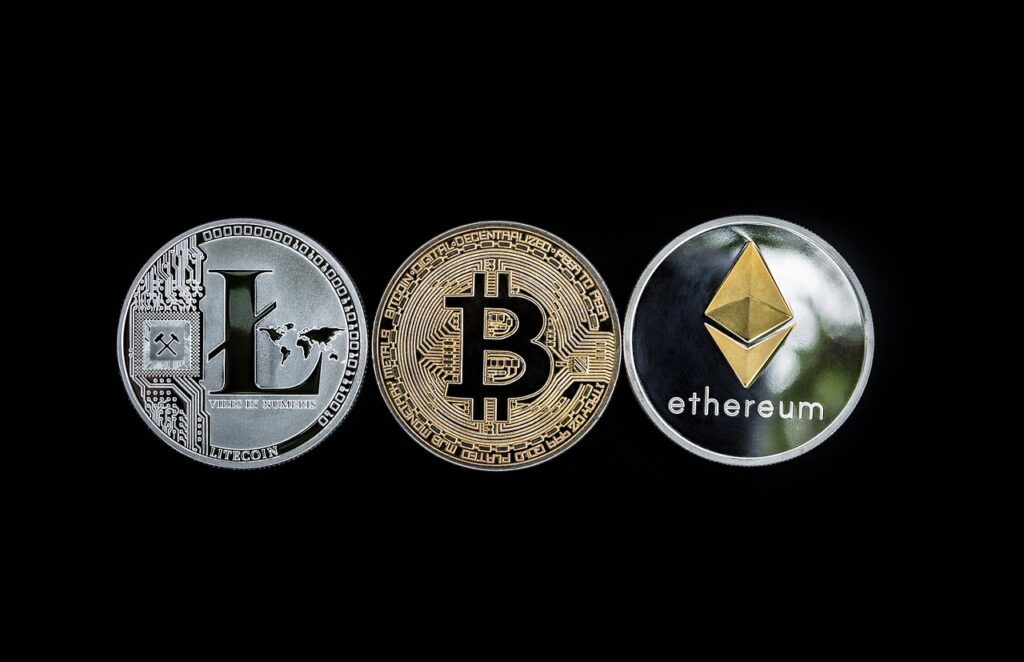
This image is property of pixabay.com.
Why 2025 matters for cryptocurrency growth
You should pay attention to 2025 because macro and technical shifts that began earlier may reach inflection points that year. Regulators, institutional adoption, and Layer 2 scaling could either accelerate or constrain growth depending on outcomes.
Macro factors that could accelerate growth in 2025
Regulatory clarity in major markets, wider institutional adoption, interest rate changes, and increased integration of blockchains with traditional finance can all spur flows into crypto. Advancements in AI, Web3 tooling, and interoperability can also enable novel use cases that drive user growth.
Macro factors that could constrain growth in 2025
You should watch for stricter regulations, major security breaches, liquidity shocks, or macroeconomic conditions that limit risk appetite. Any of these could create sudden corrections even for fundamentally strong projects.
Top contenders for fastest-growing cryptocurrency in 2025
You’ll find both large-cap and emerging projects on candidate lists. Large-cap tokens may offer steadier returns and lower chance of collapse, while smaller-cap projects might deliver higher upside mixed with greater risk. Below you’ll find an overview of several plausible contenders and what could make each grow quickly.
Bitcoin (BTC)
Bitcoin remains the most recognized digital store of value and often leads flows into crypto markets. You should consider Bitcoin for potential institutional inflows, ETF expansions, and macro-driven demand, although its growth rate may be lower than smaller altcoins due to large market cap.
Why Bitcoin could be a fastest-growing pick
If new institutional products or on-chain innovations that increase Bitcoin utility are introduced, BTC can still attract large capital inflows. You should also monitor spot ETF performance and adoption by treasuries or corporations.
Risks for Bitcoin growth
Bitcoin’s upside is limited by its already-large market cap, and regulatory actions in key jurisdictions could cap short-term performance. You’ll also contend with macro factors like interest rate trends that influence demand for risk assets.
Ethereum (ETH)
Ethereum has a vast developer ecosystem and hosts most smart contract activity and DeFi value. You should watch Ethereum’s scaling roadmap and L2 adoption, which can unlock more demand and use cases.
Why Ethereum could surge in 2025
If Layer 2 networks, sharding progress, or new scaling solutions materially reduce fees and increase throughput, Ethereum could capture a new wave of users and capital. Continued growth in NFTs, DeFi, and tokenized assets can further strengthen demand.
Risks for Ethereum
High fees and scaling bottlenecks remain risks if L2 adoption stalls or competition from other smart contract chains intensifies. You should also watch for contentious network forks or security incidents that could erode confidence.
Solana (SOL)
Solana emphasizes high throughput and low fees, which can attract Web3 apps and traders who need speed. You should consider Solana’s potential for rapid growth if decentralized applications scale and user experience stays reliable.
Why Solana could grow quickly
Fast transaction speeds and low cost make Solana attractive for gaming, NFTs, and high-frequency trading. If developer infrastructure matures and outages become less frequent, adoption could accelerate.
Risks for Solana
Network reliability and centralization concerns have been recurring issues; you should account for these operational risks. Regulatory scrutiny of large validator clusters or listed projects could also impact investor sentiment.
Aptos and Sui (Layer 1s designed for performance)
Aptos and Sui focus on scalability, parallel execution, and developer-friendly tooling, making them contenders for rapid ecosystem growth. You should monitor whether projects build real applications on their chains and whether migration from other ecosystems occurs.
Why Aptos and Sui could grow
Their modern architectures can support high-performance applications, enabling new DeFi, gaming, and real-time use cases that strain legacy chains. Early ecosystem wins and partnerships could catalyze rapid user adoption.
Risks for Aptos and Sui
You’ll face competition from many other Layer 1s and Layer 2s, and achieving developer mindshare is a long-term effort. Network security, token distribution, and initial centralization are also concerns.
Polygon (MATIC) and other L2 aggregators
You should consider Layer 2s like Polygon for scaling Ethereum use cases and benefiting from Ethereum’s ecosystem. L2s can see explosive growth when they capture transactional demand from high-fee periods.
Growth catalysts for L2s
Mass migration of dApps to L2s, user-friendly bridging, and incentives for liquidity can drive TVL and token demand. If L2s refine UX to match Web2 expectations, user onboarding could accelerate.
Risks for L2s
You must watch cross-chain risk, bridge hacks, and competition between L2s that could fragment liquidity. You’ll also need to monitor any centralization trade-offs that harm long-term trust.
Chainlink (LINK) and oracle networks
Oracles are essential for connecting blockchains to real-world data, making Chainlink and similar projects crucial infrastructure. You should consider oracles for steady demand as DeFi and tokenized real-world assets expand.
Why oracles can be fast-growing
As more financial products rely on reliable external data and cross-chain state, oracles see increased usage and token utility. Multi-chain expansion and new oracle products (e.g., verifiable randomness, fraud proofs) can boost demand.
Risks for oracle networks
You should watch security failures or loss of reputation, which can severely hamper adoption. Competition from new oracle models or proprietary data feeds offered by centralized services could also limit growth.
Binance Coin (BNB)
BNB benefits from Binance’s ecosystem, including exchange utility, BSC DeFi activity, and token burn mechanics. You should evaluate BNB for growth tied to Binance’s market share and BSC adoption.
Why BNB might grow
If Binance expands services, custody adoption, or regulatory clarity permits growth, demand for BNB could increase. The coin’s utility in fees and within Binance’s Web3 initiatives adds a consistent use case.
Risks for BNB
Concentration of influence in a single exchange and regulatory headwinds toward Binance could dampen growth prospects. You should account for jurisdictional risks and potential delistings.
This image is property of pixabay.com.
How to research and vet potential fastest-growing coins
You’ll want a structured research process that blends qualitative and quantitative checks. This reduces the chance of falling for hype or projects with fragile foundations.
Research checklist (high level)
- Project fundamentals: whitepaper, roadmap, team, tokenomics.
- On-chain indicators: active addresses, transaction volume, token holders.
- Developer activity: GitHub commits, proposal cadence, grants.
- Community and adoption: social sentiment, partnerships, dApp launches.
- Security track record: audits, bug bounties, historical incidents.
- Liquidity and exchange listings: ease of buying and selling, volume.
Tools and resources to use
Use blockchain explorers, DeFi analytics platforms, developer repositories, and reputable news sources to form your view. Combining on-chain data with community signals helps you filter promising projects from noise.
Table: Useful research tools and what they show
| Tool type | Example | What you learn |
|---|---|---|
| Blockchain explorers | Etherscan, Solscan | Addresses, transactions, token holders |
| DeFi analytics | DeFiLlama, DappRadar | TVL, dApp usage metrics |
| Developer platforms | GitHub, GitLab | Commit frequency, contributors |
| Social analytics | LunarCrush, Santiment | Sentiment, engagement trends |
| Price aggregators | CoinGecko, CoinMarketCap | Market cap, volume, listings |
| Auditing firms | CertiK, Trail of Bits | Security assessment history |
Tokenomics and supply mechanics you should understand
Token supply, issuance schedule, and distribution matter a lot for future price action. You’ll be exposed to dilution if new tokens are continually minted or if large stakeholders release tokens into the market.
Key tokenomics items to review
- Total supply vs circulating supply and vesting schedules.
- Emission rate and inflation mechanics.
- Token utility (governance, fees, staking rewards).
- Lockups and release cliff schedules for founders and early investors.
How tokenomics affect growth potential
You should prefer projects where token utility aligns with demand and where dilution risks are transparent and manageable. Programs that burn tokens or use buybacks can give deflationary pressure that supports price.
This image is property of pixabay.com.
Risk management and portfolio construction
You must control risk because crypto markets are volatile, and even high-potential tokens can crash. Diversify across different types of projects, set position limits, and use stop-loss or take-profit rules aligned with your risk profile.
Sample portfolio allocations by risk tolerance
| Risk profile | Allocation to large caps | Allocation to promising mid-caps | Allocation to high-risk small caps |
|---|---|---|---|
| Conservative | 80% | 15% | 5% |
| Balanced | 50% | 35% | 15% |
| Aggressive | 30% | 40% | 30% |
You should tailor allocations to your time horizon and risk tolerance. Rebalance periodically and avoid overexposure to tokens with low liquidity.
Practical risk controls
Set maximum position sizes (e.g., 2–5% of portfolio per high-risk coin), use dollar-cost averaging to enter positions, and maintain an emergency cash buffer to avoid forced sales. Use hardware wallets for custody of long-term holdings.
How to buy the fastest-growing coins and secure them
You’ll likely use centralized exchanges for convenience and decentralized exchanges for smaller or newer tokens. Custody security should match your holding horizon: use exchanges for short-term trading and hardware wallets for long-term storage.
Step-by-step buying and custody process
- Choose a reputable exchange and complete KYC. Make sure you check fees and withdrawal policies.
- Fund your account and place limit orders to avoid slippage on large orders. Use market orders only for small trades or when quick execution is essential.
- For smaller or new tokens, use a DEX and wrap or bridge assets carefully. Verify contract addresses to avoid scams.
- Move long-term holdings to cold storage (hardware wallet) and keep recovery phrases offline. Use multi-signature options for larger balances.
Table: Exchanges and custody options (pros/cons)
| Option | Pros | Cons |
|---|---|---|
| Centralized exchange | Liquidity, fiat on/off ramps | Custodial risk, potential freezes |
| Decentralized exchange | Access to new tokens, no custody | Higher UX friction, smart contract risk |
| Hardware wallet | Strong security for long-term | Slightly more complex to use |
| Custodial institutional services | Insurance, convenience | Higher fees, KYC requirements |

Legal and tax considerations you should track
You must report crypto transactions according to your jurisdiction’s tax rules and maintain records. Tax treatment varies—capital gains, income, or other categories—depending on activities like trading, staking, and airdrops.
Practical record-keeping tips
Use transaction-tracking software or spreadsheets with exchange export files to record buys, sells, transfers, and staking rewards. You should consult a tax professional for specific filing guidance.
Regulatory watchpoints for 2025
Keep an eye on major regulatory updates about securities law applied to tokens, stablecoin rules, and exchange licensing. You should be ready to adapt if your chosen jurisdictions change compliance requirements.
Red flags and scams to avoid
You’ll encounter projects with flashy marketing but weak fundamentals. Common red flags include anonymous teams with no verifiable track record, unverifiable partnerships, unrealistic return promises, and centralized token control.
Common scam indicators
- Promises of guaranteed returns or perpetual yield.
- Token contracts that allow admins to mint or drain funds.
- Low liquidity paired with big token allocations to insiders.
- Plagiarized whitepapers or fake audit logos.
How to validate project legitimacy
You should verify team identities, cross-check audit reports directly with auditors, and confirm partnerships from partner sources. Use small test transactions and verify contracts before committing large funds.

Indicators to watch in real time for 2025
You should follow on-chain signals, market structure, derivatives flows, major exchange listings, and regulatory headlines. These short-term indicators can inform timing, though they shouldn’t replace long-term fundamentals.
Useful on-chain and market signals
- Rapid increase in active addresses or TVL.
- Spike in stablecoin inflows and funding rates.
- Large holder accumulation patterns and vesting cliff activity.
- Increased GitHub commits or major protocol upgrades.
Hypothetical case study: How growth might unfold
Imagine a Layer 1 chain launches a major upgrade that lowers fees and adds developer tooling. You might see an initial spike in developer activity, followed by a surge in dApp launches, higher TVL, and subsequent token demand driving price appreciation.
What you would watch in that case
You should monitor developer metrics, integration announcements, and user retention on dApps to see whether the upgrade creates sustainable growth or a short-lived hype cycle. Pair on-chain metrics with market liquidity to judge whether price moves are robust.
Practical checklist for positioning yourself for the fastest-growing crypto
Use this checklist each time you evaluate a candidate to stay disciplined and consistent in your approach.
Actionable checklist
- Confirm team credibility and transparency.
- Review tokenomics and vesting schedules.
- Track developer activity and dApp launches.
- Check on-chain metrics (active addresses, TVL, volume).
- Verify security audits and past incidents.
- Assess liquidity and exchange availability.
- Define position size and risk controls.
- Use appropriate custody (hardware wallet for long-term).
- Keep tax records and comply with regulations.
Final thoughts and cautious optimism
You should approach the search for the fastest-growing cryptocurrency with a mix of curiosity and skepticism. The biggest gains often come with significant risk, so horizon, diversification, and disciplined risk management will be your best tools.
Friendly closing reminder
No single project is guaranteed to be the fastest-growing, and past performance does not predict future results. You should do your own research, stay updated on market and regulatory news, and consider consulting a financial professional before making large investments.

You May Also Like


More From Author