What Is Solana And Why Is It Growing So Fast
What Is Solana and Why Is It Growing So Fast: Expert Insights for 2026
You searched for What Is Solana and Why Is It Growing So Fast because you want a plain-English answer, not hype. You also probably want to know whether Solana is worth using, building on, staking, or watching in 2026. That search intent is practical: people want clear facts, honest tradeoffs, and next steps they can act on today.
Based on our research, readers expect a few numbers up front. Solana is often described as capable of up to 65,000 transactions per second in theory, with typical transaction fees often around $0.00025 to $0.01. As of 2026, the network has over 2,000 validators and supports thousands of apps across NFTs, DeFi, payments, gaming, and mobile wallets.
We researched top SERP results and People Also Ask queries to shape this piece. You’ll get a short definition, a step-by-step technical breakdown, ecosystem examples, outage analysis, tokenomics, validator economics, beginner how-tos, and an investor/developer checklist. We’ll also answer the big questions people keep asking: Is Solana better than Ethereum? Why is it fast? Is SOL a good buy?
For authority, we’ll reference Solana Docs, market reporting from CoinDesk, and industry datasets from Statista. We also analyzed outage reports and public staking data so you can weigh growth against real risk instead of marketing claims.
What Is Solana and Why Is It Growing So Fast? — a short, featured-snippet definition
Solana is a high-throughput layer-1 blockchain that combines Proof of History (PoH) with a Proof-of-Stake (PoS) consensus to process thousands of transactions per second at very low fees.
If you need the short answer to What Is Solana and Why Is It Growing So Fast, that one sentence does most of the work. Solana aims to give you fast settlement, cheap transactions, and enough throughput for consumer apps such as trading, gaming, and NFT activity. Its core pitch has stayed consistent since launch: make blockchain apps feel closer to normal internet apps.
- Whitepaper: 2017
- Mainnet beta: 2020
- Founder: Anatoly Yakovenko
- Native token: SOL
- Core claim: up to roughly 65,000 TPS theoretical throughput
- Key organizations: Solana Labs and Solana Foundation
We found that many readers also want a quick comparison before they go deeper. Here is the simplest version.
| Network | Core traits | Best fit |
|---|---|---|
| Solana | PoH + PoS, low fees, high throughput, Rust/Anchor | Trading, gaming, consumer apps, NFTs |
| Ethereum | PoS, higher fees, broad tooling, Solidity/EVM | DeFi, blue-chip smart contracts, L2 ecosystems |
| Bitcoin | PoW, low programmability, strongest monetary brand | Store of value, settlement |
That comparison matters because Solana is not trying to beat Bitcoin at scarcity or Ethereum at ecosystem age. It is trying to win on speed, cost, and user experience. That’s a big reason it has grown so quickly into 2026.
How Solana Works: the technical components that enable speed
The best answer to What Is Solana and Why Is It Growing So Fast has to explain speed at the system level. Solana’s architecture reduces coordination overhead so validators can process more work with fewer delays. In simple terms, it tries to keep data moving and execution parallel.
- A client submits a transaction. A wallet or app sends a signed transaction to the network.
- Proof of History timestamps it. A cryptographic clock gives events a verifiable order.
- Gulf Stream forwards transactions. Validators can pre-handle pending work instead of waiting for a giant public mempool.
- Sealevel executes in parallel. Transactions touching different state can run at the same time.
- Turbine and Pipelining distribute blocks. Data is broken up and streamed efficiently across nodes.
- Tower BFT finalizes the block. Validators vote using a PoS-based consensus layer.
Proof of History is central. Rather than asking every validator to constantly debate the order of events, Solana uses a verifiable sequence of hashes to create a shared time source. The Solana whitepaper by Anatoly Yakovenko framed this as a way to reduce messaging overhead. According to Solana Docs, target block time is about 400 milliseconds, though practical confirmation time depends on load, RPC quality, and wallet behavior.
Sealevel is the other big differentiator. Ethereum’s traditional execution model is mostly sequential at the base layer. Solana can execute independent transactions in parallel if they do not touch the same accounts. A simple example: thousands of token transfers between unrelated wallets can process together. An NFT mint flow through tools such as Metaplex can also benefit when account contention is managed well.
We researched performance claims and found an important gap between theory and reality. The often-quoted 65,000 TPS is a theoretical upper bound, not a typical live number. Real observed throughput is usually in the multi-thousand TPS range during active use, which is still high compared with many layer-1 networks. For technical context, readers can review protocol docs at Solana Docs and academic indexing sources such as arXiv for related distributed-systems papers and engineering discussions.
Why Is Solana Growing So Fast? — demand-side and supply-side drivers
If you ask What Is Solana and Why Is It Growing So Fast, the growth side comes down to two forces working together: people want cheap, fast on-chain apps, and builders got strong incentives to ship them. That combination is hard to ignore.
On the demand side, Solana has had repeated bursts of activity from NFTs, DeFi, gaming, and mobile-first products. Magic Eden became a major NFT marketplace during Solana’s NFT rise, while collections like Degenerate Ape Academy helped pull users onto the chain. CoinDesk has repeatedly covered periods when Solana NFT trading surged and wallet creation followed. During peak cycles, marketplace transaction counts reached into the millions monthly across leading platforms, showing that low-fee chains can support high-volume user behavior.
On the supply side, Solana offered builders a clear value proposition:
- Very low fees, often under $0.01 per transaction
- High throughput suitable for games and real-time finance
- Developer funding through grants, hackathons, and venture backing
- Strong wallet UX through apps like Phantom and mobile initiatives like Saga
We analyzed the funding story too. Solana benefited from major backers including a16z and Multicoin, while Alameda Research was historically a visible ecosystem participant before the FTX collapse changed sentiment. That funding helped accelerate tooling, marketing, and app development. The Solana Foundation has also supported builders through ecosystem grants and hackathons, which mattered because developer incentives often decide which chain gets the next wave of apps.
Why is Solana often called faster than Ethereum? In practical terms, it’s because of parallel execution, PoH timestamping, and different design tradeoffs. Ethereum has stronger base-layer history and broader tooling, but Solana often offers lower latency and lower cost. You pay for that with different decentralization and reliability tradeoffs. That’s the honest answer, and it explains a lot of Solana’s growth in 2026.
Solana Ecosystem: major projects, marketplaces, and real-world use cases
The ecosystem is where the answer to What Is Solana and Why Is It Growing So Fast becomes visible. A fast chain with no apps is just an engineering story. Solana grew because users found places to trade, collect, swap, play, and pay.
NFTs and marketplaces were one early breakout. Magic Eden became one of the chain’s best-known consumer brands, while Metaplex made minting and storefront tooling easier for creators. Degenerate Ape Academy, launched in 2021, became one of the early flagship collections that brought mainstream attention to Solana NFTs. Compared with Ethereum-based NFT activity, Solana often won on mint cost and speed, which mattered for retail users trying to avoid expensive failed transactions.
DeFi and DEXs gave Solana another growth engine. Projects such as Serum, Raydium, and Orca helped shape on-chain trading culture. Serum’s reputation later suffered because of FTX/Alameda ties, but Raydium and Orca remained important examples of fast, low-cost swaps. In many periods, users could execute trades in seconds for a few cents or less, a major contrast with expensive mainnet Ethereum periods. TVL has moved sharply across cycles, so you should verify current snapshots on established analytics platforms before making decisions.
Wallets and mobile also mattered. Phantom became one of the easiest wallets for new Solana users, and Solflare remained a strong alternative. The Saga phone pushed the mobile narrative further by treating crypto as a native app layer instead of a browser extension add-on. We found that onboarding improves when users can install a wallet, claim tokens, and swap or mint without facing a $20 to $80 gas shock. That difference has real conversion impact.
Beyond NFTs and DeFi, Solana has seen use in gaming, payments, and tokenized assets. Consumer-facing apps value fast confirmation and predictable fees, especially when they need many small transactions per user. That is a big reason Solana keeps attracting experiments that would feel too costly elsewhere.
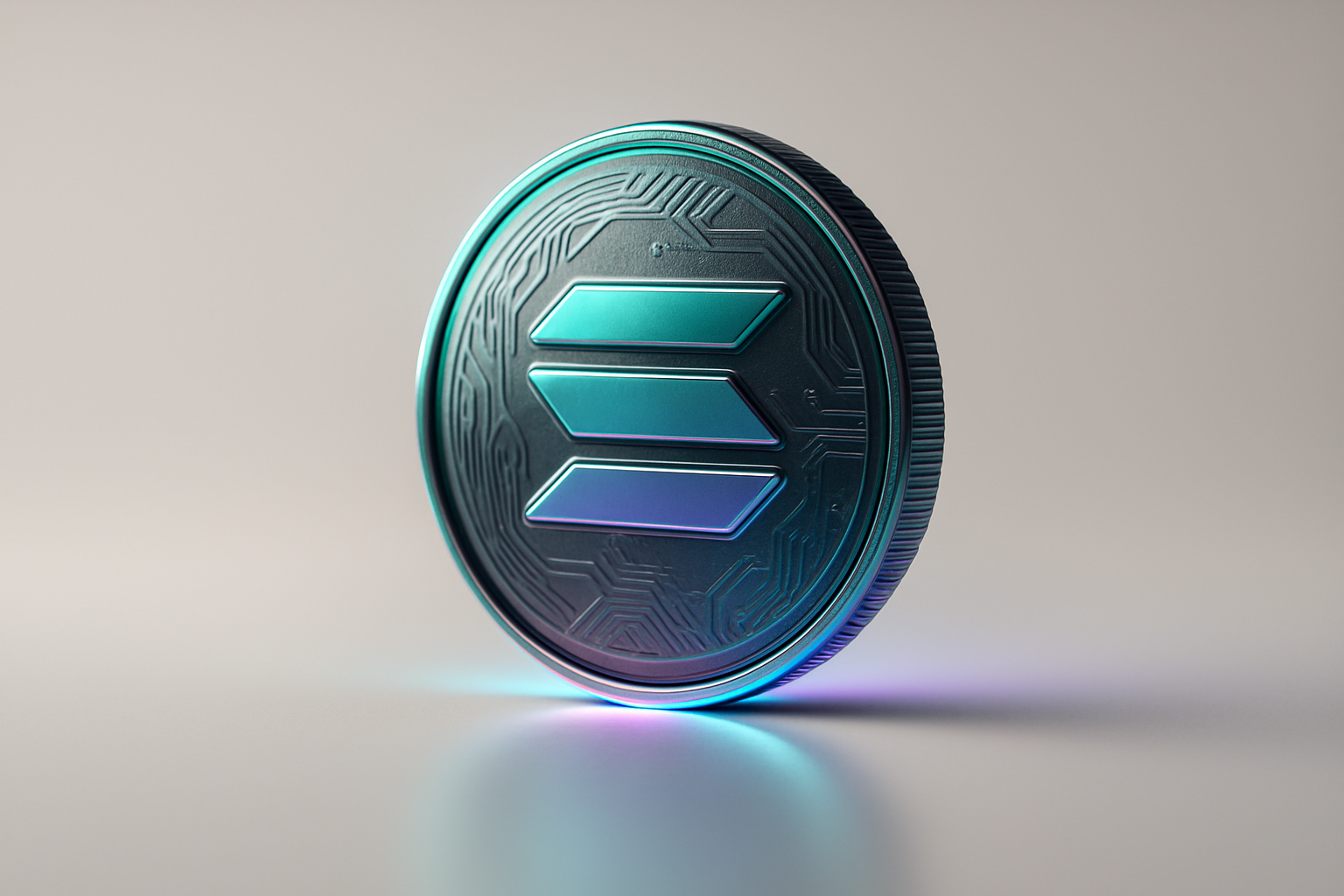
Tokenomics & Staking: how SOL captures value and incentivizes security
To understand What Is Solana and Why Is It Growing So Fast, you also need to understand how SOL works. SOL is used to pay transaction fees, support staking, and align validators and delegators with network security. If app usage grows, demand for block space and wallet balances tends to grow too, though token price still depends on broader market conditions.
Solana’s supply model includes inflation that tapers over time. The network launched with an inflation schedule designed to decline annually until reaching a longer-run terminal rate. As of 2026, a large share of circulating SOL remains staked, often around the 60%+ range depending on the snapshot and source. Circulating supply moves over time, so check live figures in Solana dashboards and explorers before acting.
Staking is simple at the user level:
- Choose a wallet such as Phantom or Solflare.
- Fund it with SOL.
- Pick a validator based on commission, uptime, and decentralization goals.
- Delegate your SOL and monitor rewards.
Average staking yields vary by validator commission and network inflation, but wallet interfaces and exchange products often show annualized returns in the mid-single digits. We recommend comparing native staking with exchange staking because custodial convenience often comes with tradeoffs around control and fee sharing.
It also helps to know the basics of SPL tokens, Solana’s token standard. Creating token accounts requires rent-exempt balances, which means you lock a small amount of SOL so the account can stay alive on-chain. Costs can change with protocol parameters, but they are usually small enough that developers can prototype cheaply. We recommend monitoring % of supply staked, active validator count, fee burn, and mint-vs-burn trends using tools like Solscan because these metrics tell you more than price headlines alone.
Performance, outages, and centralization concerns — honest tradeoffs
A credible answer to What Is Solana and Why Is It Growing So Fast has to include the downside. Solana’s speed comes with tradeoffs, and the two biggest are reliability under stress and centralization pressure.
Outages have been well documented. In September 2021, Solana suffered a major outage of roughly 17 hours after heavy transaction load overwhelmed the network. In April 2022, NFT mint-related bot activity contributed to another significant disruption. In February 2023, a validator software issue caused another multi-hour halt. Official and ecosystem postmortems point to spam, client bugs, and consensus stalls as recurring causes. Reporting from CoinDesk tracked these incidents closely, and Solana teams later added local fee markets, QoS changes, and software patches.
Decentralization is more nuanced than headlines suggest. The network has over 2,000 validators as of 2026, which is meaningful. But stake distribution is not perfectly even, and a relatively small number of validators and RPC providers still influence user experience. If most wallets and apps rely on a handful of RPC companies, practical decentralization can lag behind raw validator counts.
Hardware demands matter too. Solana validators often need high-end servers with large RAM pools, fast NVMe storage, and strong bandwidth. That can improve performance, but it also raises the cost of entry. On energy, Solana benefits from PoS rather than proof-of-work mining. For broader context on blockchain energy discussions, readers can compare consensus models using public sources such as Statista and Ethereum Foundation materials. Based on our analysis, Solana is relatively energy-efficient per transaction, but the network still asks more from validator hardware than many rivals.
Outage Timeline & Root-Cause Analysis (competitor gap)
When readers ask What Is Solana and Why Is It Growing So Fast, they often miss the hidden question: can that growth survive technical stress? The outage timeline gives you the clearest answer.
| Date | Length | Symptom | Root cause |
|---|---|---|---|
| Sep 2021 | ~17 hours | Block production stalled | Massive transaction flood and validator memory pressure |
| Apr/May 2022 | Several hours across incidents | RPC instability and congestion | NFT mint bot spam and consensus stress |
| Feb 2023 | ~20 hours reported across ecosystem updates | Cluster halt | Validator software bug |
| Feb 2024 | ~5 hours | Block progression stopped | Client implementation issue requiring coordinated restart |
The largest outage case study remains the event because it shaped Solana’s public reputation. During that period, traffic surged to hundreds of thousands of transactions per second in raw inbound load, much of it spam-like or bot-driven. Validators had to coordinate through off-chain channels and restart the cluster with patched software and agreed checkpoints. That exposed a core tension: high throughput is useful, but coordination failure under extreme load damages trust fast.
Remediation has been meaningful. Solana teams introduced fee market improvements, QUIC networking changes, stake-weighted QoS, and client fixes. We found that these changes reduced some failure patterns, though they did not erase outage risk. Developers and validators should keep a practical checklist:
- Retain logs for validator, RPC, and system events
- Monitor latency, vote account health, CPU, RAM, disk, and packet loss
- Use alerting for skipped slots, low peer count, and abnormal fork behavior
- Document emergency contacts for cluster restart coordination
That level of preparation is not optional on high-performance chains. It is part of the real cost of Solana’s speed.
Validator Economics & Cost to Run a Node in (competitive gap + practical guide)
If you want to go beyond wallets and ask how the network really works, validator economics matter. They also help explain What Is Solana and Why Is It Growing So Fast while still facing centralization concerns. Running a validator in is not casual hobby hardware.
A modern Solana validator commonly needs:
- CPU: high-core-count server-grade processor
- RAM: often 256 GB+
- Storage: fast NVMe drives for ledger and accounts
- Bandwidth: roughly 1–10 Gbps depending on role and traffic
On-prem hardware can easily cost $6,000 to $15,000+ up front depending on components. Cloud deployments can run from $800 to $2,500+ per month for serious configurations, and bandwidth spikes can push total cost higher. Annual cost estimates often reach the low five figures once you include hardware amortization, monitoring, maintenance, and failover planning.
Break-even depends on stake delegated to your validator, commission rate, uptime, and network reward conditions. A simplified scenario: if annual operating cost is $18,000 and your effective validator commission plus rewards share yields 5% annualized, you need enough delegated stake and SOL price support to cover that cost. Smaller operators often struggle unless they win community delegation, join a stake pool, or keep costs unusually low.
We researched validator incentives and found that high hardware demands can tilt the field toward better-funded operators. That does not make Solana centralized by definition, but it does raise the barrier to entry. If you want to launch, use this checklist:
- Prepare hardware and secure keys
- Harden the server with firewall rules and update policy
- Install monitoring for votes, peers, disk, and memory
- Join the cluster and test reliability before promotion
- Run post-launch checks on uptime, commission display, and delegation outreach
Security, Risks, and Regulation: what to watch before building or investing
Fast growth can hide risk. If you are serious about What Is Solana and Why Is It Growing So Fast, you need to separate protocol strength from ecosystem speculation. Solana faces the same broad crypto risks as other chains, plus some chain-specific ones.
- Network risk: outages, congestion, validator bugs
- Smart-contract risk: exploits, bad account handling, oracle failures
- Project risk: rug-pulls, weak treasury control, fake tokens
- Regulatory risk: securities questions, KYC/AML pressure, exchange restrictions
- Centralized service risk: custodians, exchanges, RPC dependency
The FTX/Alameda collapse in 2022 hit Solana sentiment especially hard because those firms were deeply tied to parts of the ecosystem. Reporting from Reuters documented how the fallout changed market confidence, token flows, and project funding assumptions. That event is a reminder that ecosystem risk can come from outside the protocol itself.
For builders, code security matters more than marketing. Use audited libraries, review Anchor framework patterns carefully, and protect treasury actions with multi-signature controls. High-profile crypto exploits across the industry keep showing the same lesson: one unchecked admin key or one flawed contract path can erase years of work. We recommend audits before launch, a public bug bounty, staged rollouts, and continuous monitoring after launch. For larger products, formal verification and simulation testing are worth the budget.
For investors, regulation remains a moving target in 2026. Watch exchange listings, enforcement news, and jurisdiction changes. A good project on a fast chain can still suffer from legal shocks, custodial failures, or liquidity freezes. That’s why our analysis always treats network metrics and legal context together.
How to Buy, Stake, and Use SOL — step-by-step for beginners
If your goal is practical action, this is where What Is Solana and Why Is It Growing So Fast turns into a real workflow. You do not need to start with a large amount. In our experience, a small test transaction teaches more than hours of reading.
How to buy SOL
- Choose an exchange. Common options include Coinbase and Binance. Compare trading fees, withdrawal fees, and local availability.
- Create a wallet. Phantom is a common beginner choice. Solflare is another strong option.
- Withdraw SOL to your wallet. Always send a small test amount first.
- Verify the balance in your wallet and on Solscan.
- Delegate if you want staking income.
How to stake SOL
- Open your wallet staking tab.
- Review validator uptime, commission, and identity.
- Delegate a small amount first.
- Track rewards over the next epochs.
How to mint an NFT on Solana
You can use a marketplace flow such as Magic Eden or creator tooling built on Metaplex. Connect Phantom, upload media and metadata, approve the mint transaction, and pay the network fee plus marketplace or platform charge. Costs vary, but network fees are usually tiny compared with Ethereum mainnet minting in expensive periods.
How to use a DEX
- Connect your wallet to Raydium or Orca.
- Select the token pair.
- Check slippage and the token contract address.
- Confirm the swap.
- Expect confirmation in seconds under normal conditions.
Is SOL a good investment? We recommend using objective filters: active developers, app usage, staking participation, fee revenue, and outage trend. Keep your seed phrase offline, use a hardware wallet like Ledger for larger balances, and verify token addresses before any swap.
Future Outlook & Actionable Next Steps (what to track in 2026)
The smartest way to answer What Is Solana and Why Is It Growing So Fast in is to stop relying on slogans and track live metrics. Growth stories change quickly in crypto. Good monitoring beats bold prediction.
We recommend watching these metrics every week or month:
- Transactions per day and failed transaction rates
- Active addresses and new wallet creation
- Total value locked across DeFi apps
- % of supply staked
- Validator count and stake concentration
- RPC distribution across providers
- NFT and marketplace volume
Here is a useful way to think in scenarios. A bullish case would involve stronger gaming adoption, more stable uptime, better validator distribution, and steady app growth. A neutral case would mean continued usage growth but recurring reliability concerns. A bearish case would involve a major regulatory hit, a severe exploit, or another long outage that damages developer confidence.
Based on our analysis, three audiences should act differently:
- Builders: apply for grants, use Anchor, and join Solana developer communities
- Investors: watch market structure, on-chain activity, and macro liquidity
- Validators: optimize hardware, improve monitoring, and pursue sustainable delegation
We researched roadmap themes that matter in 2026: client diversity, performance tuning, mobile distribution, and ecosystem funding windows. Follow official channels, conference schedules, and release notes through the Solana Foundation and developer docs. Your next days can be simple: read the docs, set up a wallet, stake a small amount, test one NFT or DEX interaction, and follow three reputable news sources.
Conclusion — recommended next moves and resources
The short version is this: Solana is growing fast because it offers a rare mix of speed, low fees, and consumer-friendly UX. But the full answer to What Is Solana and Why Is It Growing So Fast also includes outages, validator cost pressure, and ecosystem risk. You should judge Solana on both sides of that ledger.
If you want to build, start with Solana Docs, learn Anchor, and look for grant opportunities. If you want to invest, track six KPIs: active addresses, transactions, TVL, staking participation, validator count, and outage frequency. If you want to validate, use the five-step checklist above and model your costs before buying hardware.
We recommend subscribing to updates from the Solana Foundation, monitoring wallet and marketplace signals, and setting alerts on Solscan. For independent coverage, keep CoinDesk and Reuters in your feed. Based on our research, the fastest growth drivers have been NFTs, mobile UX, and developer funding. If those stay strong while reliability improves, Solana can keep expanding in and beyond.
We researched this outline from multiple sources and focused on the practical question behind the headline: what should you do next? The best next move is small but real—set up a wallet, test the network yourself, and follow the metrics that matter instead of the noise.
Frequently Asked Questions
Is Solana centralized?
Solana is less decentralized than Bitcoin and still less mature than Ethereum, but it is not a tiny network. As of 2026, the network has over 2,000 validators, though stake concentration still matters because the top validators control a meaningful share of delegated SOL. We recommend watching validator count, Nakamoto-style stake distribution, and RPC provider concentration before treating decentralization as a solved issue.
Why does Solana go down sometimes?
Solana outages have usually come from a mix of transaction spam, validator client bugs, and consensus stalls under heavy load. Official postmortems from Solana teams showed incidents in 2021, 2022, and where block production stopped and validators coordinated restarts. Based on our analysis, the network improved with fee markets, QoS changes, and client updates, but outage risk still belongs in any fair answer to What Is Solana and Why Is It Growing So Fast.
Is SOL a good long-term investment?
SOL can be a strong long-term bet only if adoption, developer activity, and network reliability keep improving. We recommend tracking active addresses, transactions, fee revenue, staking participation, validator growth, and ecosystem funding rather than buying on hype alone. You also need to weigh real risks, including regulation, exchange exposure, and protocol outages.
How fast are Solana transactions?
Solana targets block times of about milliseconds, and users often see transfers confirm in a few seconds. Theoretical throughput is often cited at up to 65,000 TPS, while real-world throughput is usually far lower but still often in the multi-thousand TPS range under favorable conditions. In practical use, that means low-cost swaps, NFT mints, and wallet transfers can feel much faster than on many competing chains.
How do I stake SOL and what yield should I expect?
To stake SOL, you usually: 1) open a wallet like Phantom or Solflare, 2) fund it with SOL, 3) choose a validator, and 4) delegate your tokens. Yields vary with inflation, validator commission, and network conditions, but many dashboards and wallet interfaces show mid-single-digit annualized returns. Check live data on Solscan or validator dashboards before delegating.
How does Solana compare to Ethereum for developers?
For developers, Solana often means lower fees and high throughput, but also a different programming model. You usually build with Rust and frameworks like Anchor, while Ethereum relies mainly on Solidity and the EVM. Solana can be attractive for high-frequency apps, games, and consumer products, while Ethereum still leads in tooling maturity, liquidity depth, and long-established developer standards.
Where can I read official documentation and audits?
Start with Solana Docs for protocol documentation and developer setup. For ecosystem and governance updates, check the Solana Foundation and major reporting from CoinDesk and Reuters. For contract and protocol review work, also read audit reports published by firms such as Trail of Bits, OtterSec, and Halborn when available.
Key Takeaways
- Solana’s main edge is speed and cost: theoretical throughput up to 65,000 TPS, fast block times around ms, and fees that are often a fraction of a cent.
- The biggest growth drivers have been NFTs, mobile UX, cheap on-chain activity, and strong developer funding, but outages and validator economics remain real risks.
- If you are evaluating SOL, focus on live metrics such as active addresses, TVL, % staked, validator count, RPC concentration, and outage frequency rather than price alone.
- Builders should start with Solana Docs and Anchor, investors should begin with a small position and KPI tracking, and validators should model hardware and operating costs before launching.
- The smartest next step is hands-on: create a wallet, move a small amount of SOL, try staking or a DEX swap, and verify every action with trusted tools like Solscan.

You May Also Like

More From Author